Latest Entries
The Pliocene as an analogue for near-future climate change?
Features

The Pliocene as an analogue for near-future climate change?

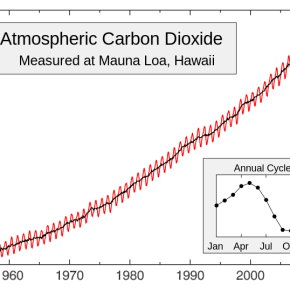
In 1958, atmospheric scientist Charles David Keeling installed an instrument at the Mauna Loa Observatory, in Hawaii, designed to measure the average global concentration of carbon dioxide (CO2) in the atmosphere. Little did he realise at the time that the results of this experiment, driven by a desire to characterise the composition of Earth’s atmosphere, … Continue reading

Groundwater Dependent Ecosystems: Event Summary
Events / Features

Groundwater Dependent Ecosystems: Event Summary

A guest post from Dr Valerie McCarthy, Assistant Lecturer at Dundalk Institute of Technology, Ireland. Groundwater Dependent Ecosystems (GDEs) are geologically and physio-graphically complex and are recognised as an important but, nevertheless, poorly understood set of habitats. At a recent event organised by the Hydrogeological Group of The Geological Society, held at the at the … Continue reading

Mercury rising
Features

Mercury rising

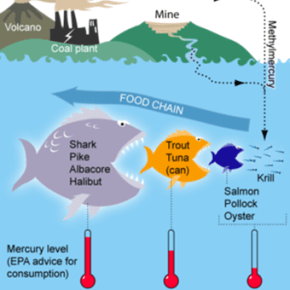
Minamata has become a word synonymous with disease. ‘Minamata disease’ was first identified in 1956, after years of chemical company Chisso discharging methyl mercury into Minamata Bay, Japan. It was a process that continued until 1968, and left over 2,500 people affected by mercury related diseases. Symptoms can range from ataxia, muscle weakness and damage … Continue reading

Out in the field

Geology for Global Development at the EGU

This was originally posted at the GfGD blog at: http://blogs.egu.eu/gfgd/2013/04/10/gfgd-at-egu2013-day-three/, by Rosalie Tostevin Mid-week at the EGU conference, and we’ve finally got all three GfGD reps in the same place at the same time for a photo! Another busy day, and we’ve picked out a few examples of the latest research being presented at EGU: Continue reading

Miscellaneous

Curiosity continues to rock on Mars

This was originally posted at: http://blogs.egu.eu/palaeoblog/?p=529 NASA might be having a rain-check on its outreach activities, but that’s not why Curiosity has gone silent the last few days. Every once in a while an event known as the Mars Solar Conjunction places Mars’ orbit directly behind the sun with respect to Earth, and makes communications impossible. … Continue reading