
The Schools Geology Challenge is an annual competition for A-Level students where they are given the chance to showcase their geological knowledge. There are two stages to the competition: the qualifier, and the final.
In the first stage, participants present a geoscience topic of their choice to an online audience. We were thrilled to receive entries across variety of topics, from the geology of Mars to the formation of Tsunamis, and we were impressed by the range of media used to illustrate the concepts discussed. The creativity of the students involved was immense and the evident passion students have for geoscience is always heart-warming. The team here at GeolSoc thoroughly enjoyed viewing each one.
Qualifying teams were invited to the Schools Geology Challenge final at Burlington House on the 23rd of March 2023. Reaching the competition final sees schools travel to the Geological Society at Burlington House to compete for a trophy as well as funding for their school. This opportunity brings school students together with professional geoscientists in a range of careers, alongside other student peers from across the UK.
The big day
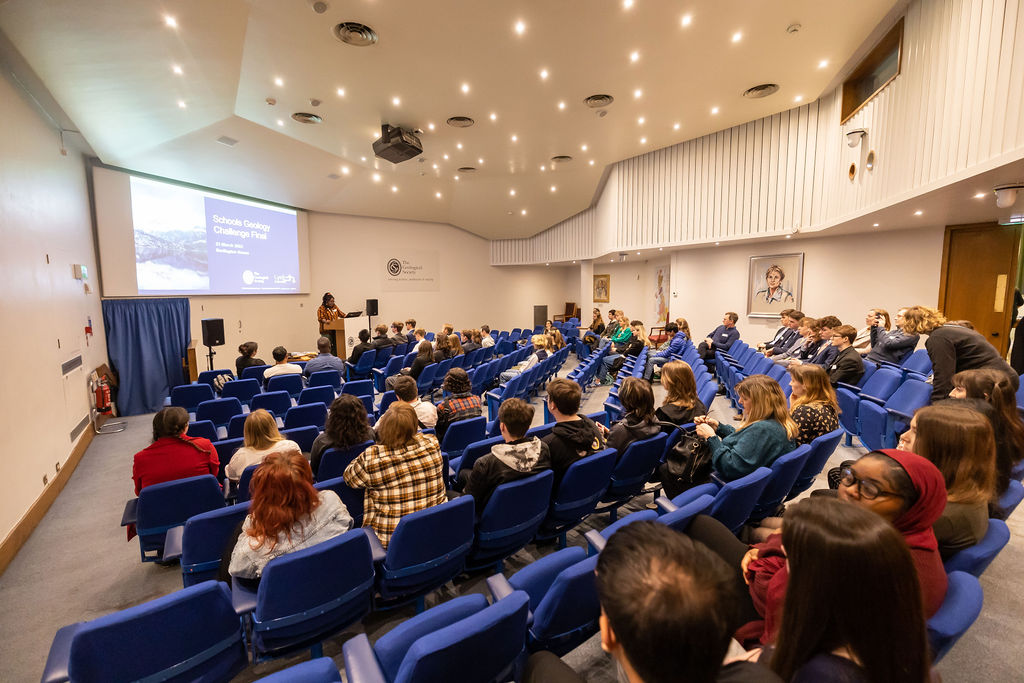
The final of the competition always includes a problem-solving exercise inspired by real world case studies. This year’s activity asked students to assess the hazards posed to the fictional town of New Barnes by the volcanic activity of nearby Mt Akingbade. Students then had to create a management plan for the hazards, using a $1billion resilience fund created by the City Council of New Barnes. Participants took on the personas of Volcanologists and investigated hazard possibilities while looking at rock samples, borehole cores and a range of maps. Students were required to place knowledge learnt within classrooms and on the day into context, such as considering how topography and terrain could affect lava flow and lead to secondary hazards. Secondary hazards in this excercise involved the possibility of several vulnerable species being wiped out, including a population of the critically endangered O’Donnells Tree Toad. Participants were also asked to consider how lava type could affect the range of hazards and their impacts.
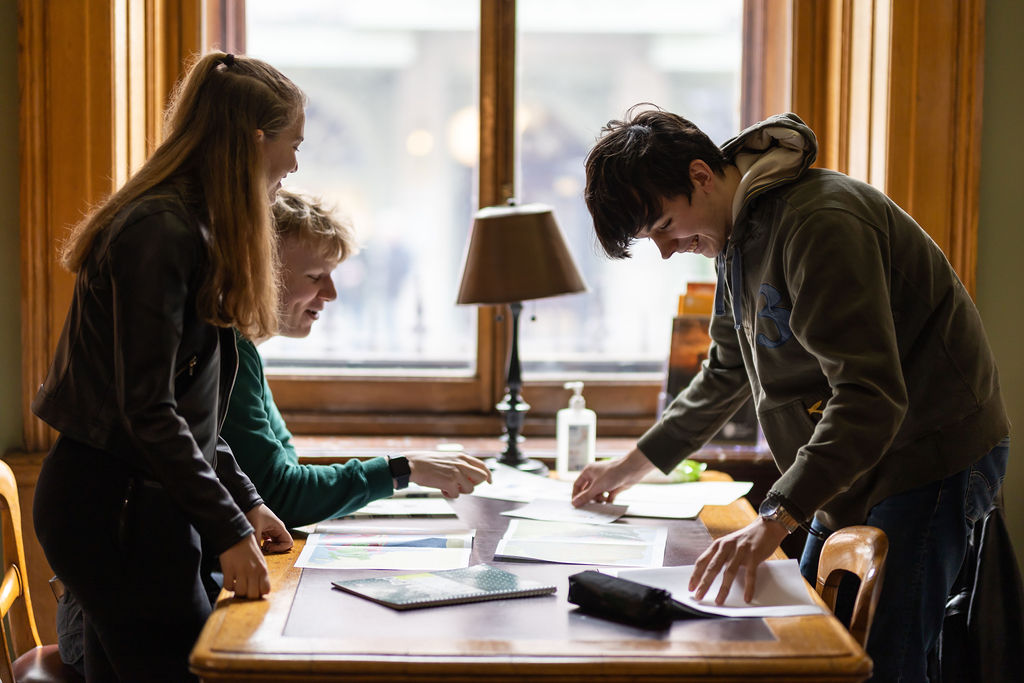

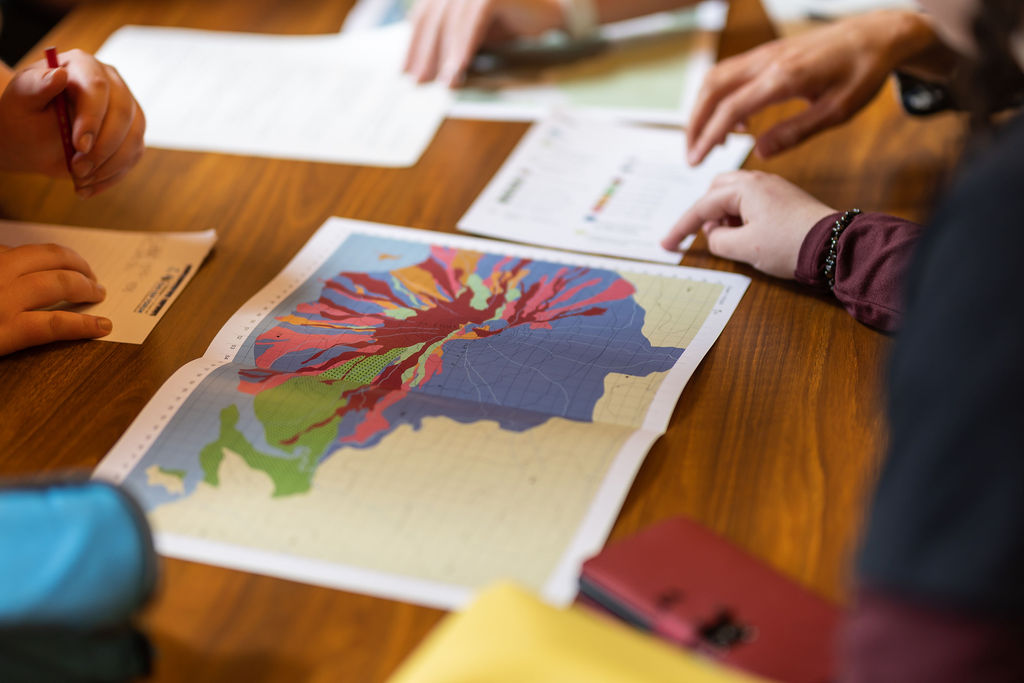
The final encourages students to think about more than the physical aspects of geoscience, but also how they relate to people, and be aware of the importance of this when evaluating hazards. Groups posed questions such as: will the lava type and surrounding landscape increase the likelihood of lahars? Which areas are likely to be affected and are they residential? If people are going to relocate, where is a safe area for them to move to?
Placing geoscience within the context of real-world examples highlights further the overlap between human and physical environments, and the vital role that geoscience plays within society.
To round off the day, students presented their findings and recommendations to our panel of judges, stating how they would manage hazard impacts and where they planned to invest funding.

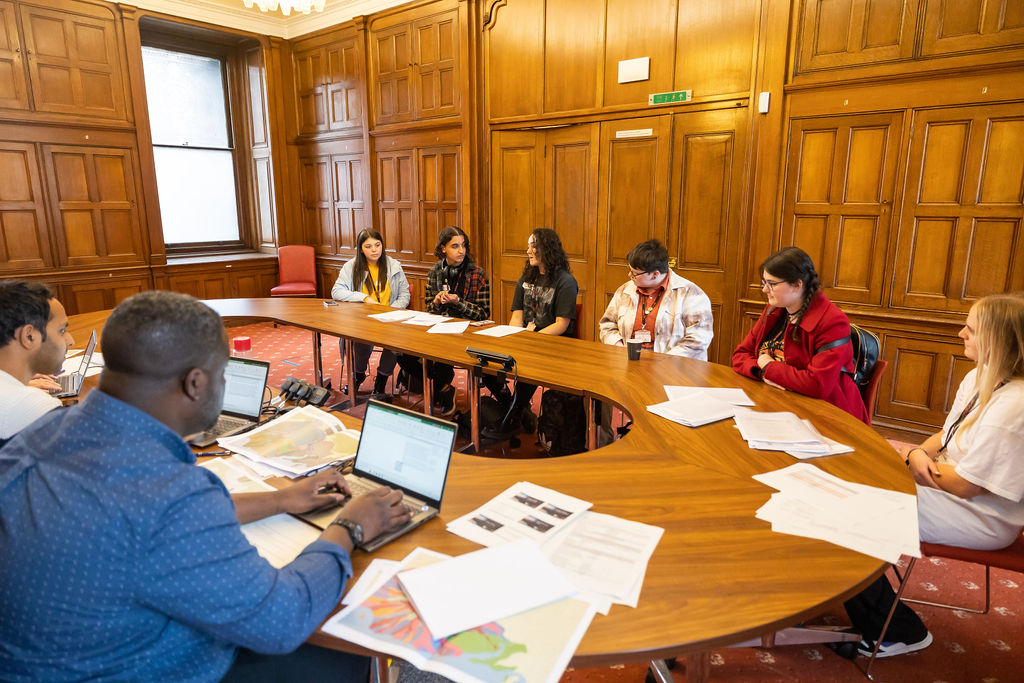

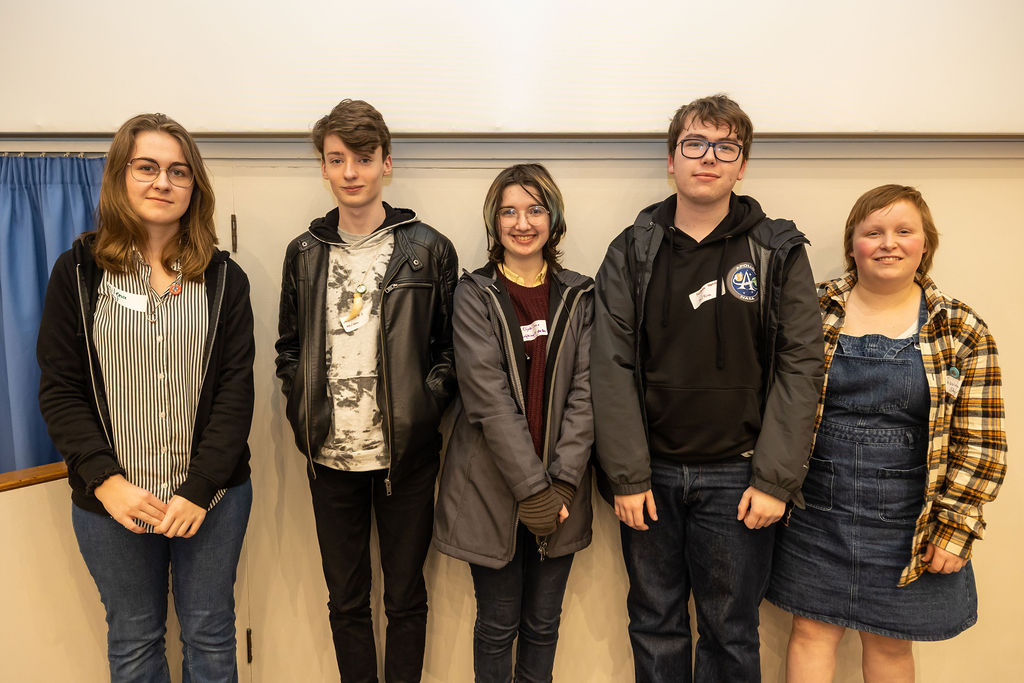
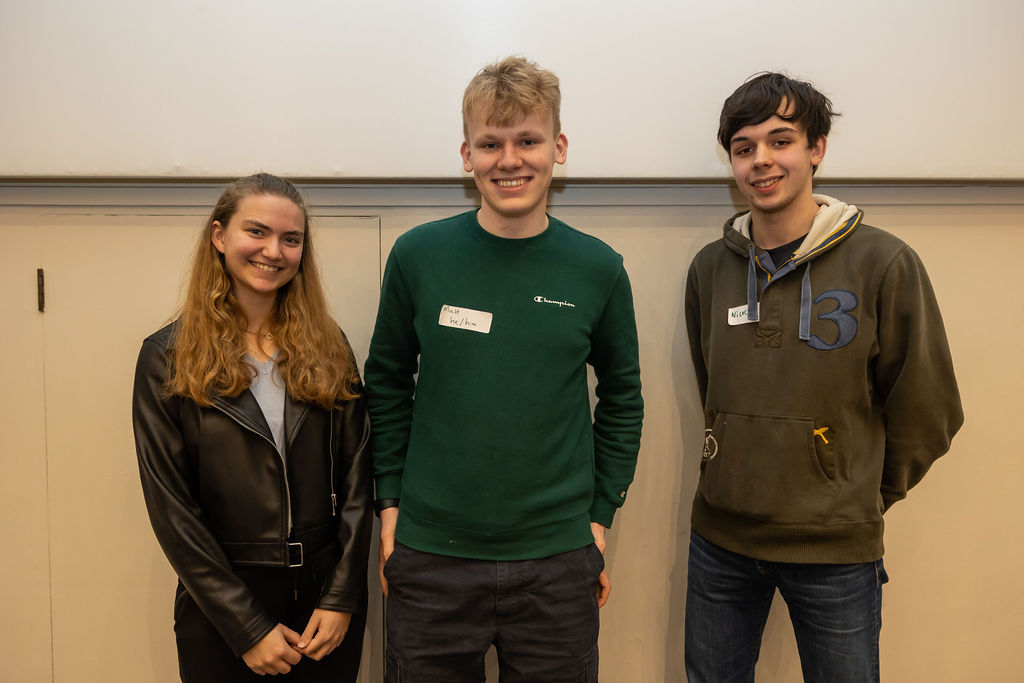
Our judges were so impressed by the efforts of all our teams this year, but were thrilled to announce the winners of the 2023 competition as Sir William Borlase’s Grammar School and the runners up as Runshaw College and The Sixth Form College, Farnborough.
Importantly, completing the tasks of Schools Geology Challenge encourages students to work outside of their comfort zones. If students perceive geoscience subjects as particularly challenging, they are more likely to shy away even if they have an interest in the subject matter. The final task of the competition aims to overcome this: although the task can appear intimidating upon first look, before they know it, students are working through the exercise confidently and independently. All students worked efficiently within their teams and took control of their own learning: this return of independence and agency to young people outside the classroom is an important aspect of the competition.
Inspiring students through meaningful experiences
On a longer-term basis, the declining trend of uptake in geoscience subjects at university level has been at the forefront of discussion within geoscience circles for years. In the 1980s, 4000 students were entered for A-Level Geology and more than 8000 students were entered into GCSE geology (Boatright, D., Davies-Vollum, S. & King, C, 2019). The numbers in this day and age are starkly different, seen in Figure 1. One of the strategic aims of Geological Society initiatives such as the annual Schools Geology Challenge is to tackle some of the challenges lying at the root of this issue, namely: lack of awareness of geoscience subjects amongst prospective students, perceived difficulty of geoscience subjects and confusion surrounding career prospects following graduation.
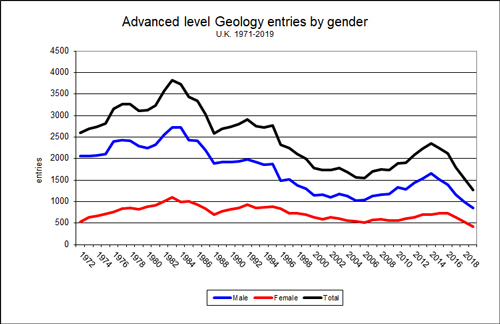
In other relevant subjects, such as chemistry, physics, maths and geography, there is a clear path from GCSE’s to A-Level and on to further study. Geoscience combines aspects of many subject areas but there can be a less clear onward path for prospective students. Its possible that this lack of defined progression is influencing student’s choice of STEM subjects at degree-level.
Taking part in the Challenge highlights the range of careers available to geoscientists, and the range of skills beneficial to studying and practicing the geosciences. Our judges take time to share their personal experience, discussing their varied careers in planetary and Martian geology, geohazard mitigation and engineering.
Until next year..
“This was my first experience of Schools Geology Challenge, and I was so impressed by all that took part. I felt really inspired by the energy and passion brought to Burlington House by both students and teachers; it was fantastic to see the students supporting each other through the challenges of the task and bringing out the best in one another. The task assessed a breadth of quite complicated geological topics and the students met this with confidence and enthusiasm. There was a clear demonstration of knowledge and understanding across the cohort and it was great to witness.
A huge thank you to Ashley and the Education Team for organising such a fantastic day!”
Katie Jones, our Policy and Communications Officer
Overall, it was incredible to have the building full of energy and inspiring to work alongside such bright minds. I am so proud of what the students achieved and the Geological Society staff that helped facilitate the day.
The 2024 Schools Geology Challenge will open for entries in September 2023. Head to our website to find out more information and see clips from previous entries. The 2023 problem solving activity is now available to download as an in classroom activity for teachers and educators.

If you would like to be a judge for the 2023 Schools Geology Challenge final or would like to contribute to the competition in some way please contact Education@geolsoc.org.uk.
Photos taken by Noah Goodrich of TwobyTwo Event Photography
References:
Boatright, D., Davies-Vollum, S. & King, C., Earth science education: The current state of play. Geoscientist 29 (8), 16-19, 2019 https://doi.org/10.1144/geosci2019-045
Please help us to pass on a passion for geoscience. We would welcome donations to support our education and outreach activities. To find out more, please contact us at development@geolsoc.org.uk or call +44 (0) 20 7432 0960.
 The Geological Society Blog
How interesting to read, and what a world away from the geology we did at school sixty years ago!