Author Archives: Florence Bullough
Door three: Five Smoke Rings…

Contamination – How the ‘C’ word can put the fear into anyone.
A guest post from Daniel Grey, a Chartered and European Geologist with an interest in the investigation and remediation of land and water pollution. He has worked in this area for a Non-Governmental Organisation, Local Authority and the Private Sector. Land contamination can be a source of deep public concern. It’s understandable, with trigger words … Continue reading

Part two: Problems in the field
Part two of a guest blog from Layik Hama at the University of Leeds. Layik is undertaking a research project on finding techniques that will lead to the development of an app for use in the field. You can read part 1 of his blog here. Novice geologists participating in introductory level field work are … Continue reading
Keeping an eye on ocean microbes
A guest post from Dr Helen Bridle, Royal Academy of Engineering and EPSRC Fellow at Heriot-Watt University. Her blog can be found here. What’s the issue? New tools to detect ocean microbes have recently been developed by researchers at the University of Southampton. The tiny microbes, known as phytoplankton, play several critical roles in the … Continue reading

Groundwater Dependent Ecosystems: Event Summary
A guest post from Dr Valerie McCarthy, Assistant Lecturer at Dundalk Institute of Technology, Ireland. Groundwater Dependent Ecosystems (GDEs) are geologically and physio-graphically complex and are recognised as an important but, nevertheless, poorly understood set of habitats. At a recent event organised by the Hydrogeological Group of The Geological Society, held at the at the … Continue reading
Mercury rising
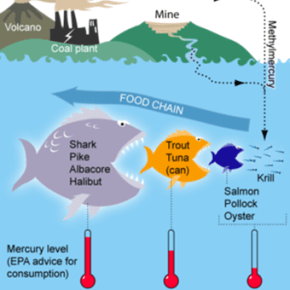
Minamata has become a word synonymous with disease. ‘Minamata disease’ was first identified in 1956, after years of chemical company Chisso discharging methyl mercury into Minamata Bay, Japan. It was a process that continued until 1968, and left over 2,500 people affected by mercury related diseases. Symptoms can range from ataxia, muscle weakness and damage … Continue reading
 The Geological Society Blog